
Top 10 Climate Change Games in India
How often do you actually sit and think about climate change? Maybe it’s the pollution hitting you while you’re stuck in traffic, the wilting trees on your evening walk or just an everyday choice like grabbing plastic because it’s cheaper and easier, no judgment. Ever wondered what it’d be like to think through these decisions without the pressure of real life? To explore the problem, maybe land on some solutions, argue about them with your friends and actually have fun doing it?
Good news: you’re in luck. Climate Undone put together a list of 10 climate games you can play in India, from card games and board games to full-on climate negotiation simulations. There are games about circular economics, biodiversity, energy transitions, climate policy and quite literally trying to stop the world from overheating. Some are something you’d bring out on game night, while others make much more sense with a classroom, office or workshop group.
This list isn’t ranked, because comparing these games would honestly be apples to oranges. Pick whatever speaks to you!
Climate Fresk
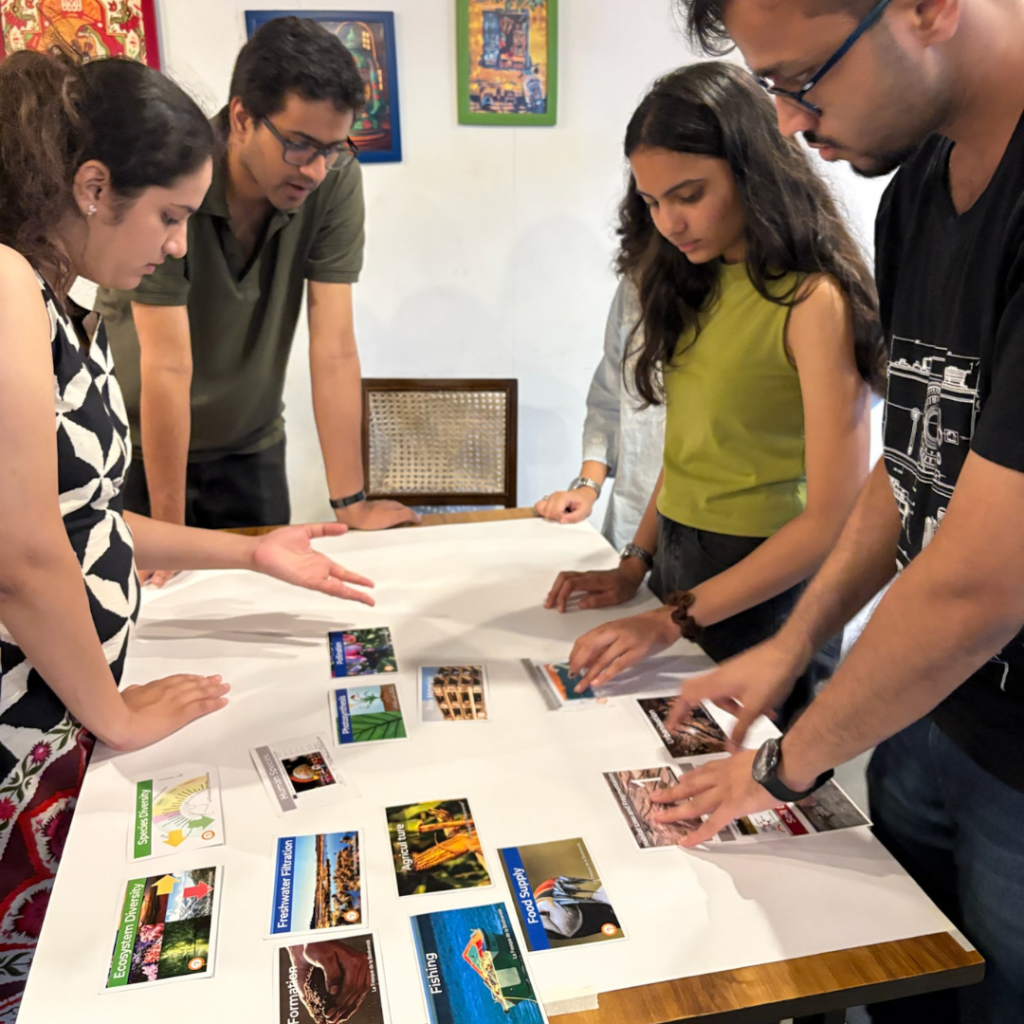
Let’s start strong with what’s arguably the most influential climate-learning activity on the planet, with more than 2.3 million participants across 170 countries, and one of Climate Undone’s most popular workshops too. Climate Fresk is a standardised workshop created by Cédric Ringenbach and based on IPCC findings. It’s a card game at its core: each card represents something tied to climate change, and players have to figure out how they connect before slowly building one giant cause-and-effect map. You might begin with something fairly obvious like fossil fuels and emissions, but eventually you’re connecting agriculture, oceans, biodiversity, extreme weather and human systems. The session wraps with a group conversation around feelings, reflections and what action could actually look like.
It runs about three hours, so it’s a bit of a commitment, but it works particularly well if you’re someone who knows about climate change but has never really understood how everything connects. It can work for older children and adults alike, and honestly makes for a genuinely solid way for parents and their pre-teens or teens to explore climate change together without it becoming a lecture. If you want a casual game night, there are probably better choices further down this list; if you actually want to understand the climate system, this is where we’d start.
- Best for: Climate beginners, families, schools, universities and workplace teams
- Players: Usually 4–14 people per facilitator
- Time: Around 3 hours
- More information: https://climatefresk.org/world/
- Join a Climate Undone workshop: https://climateundone.org/climate-fresk/
Daybreak
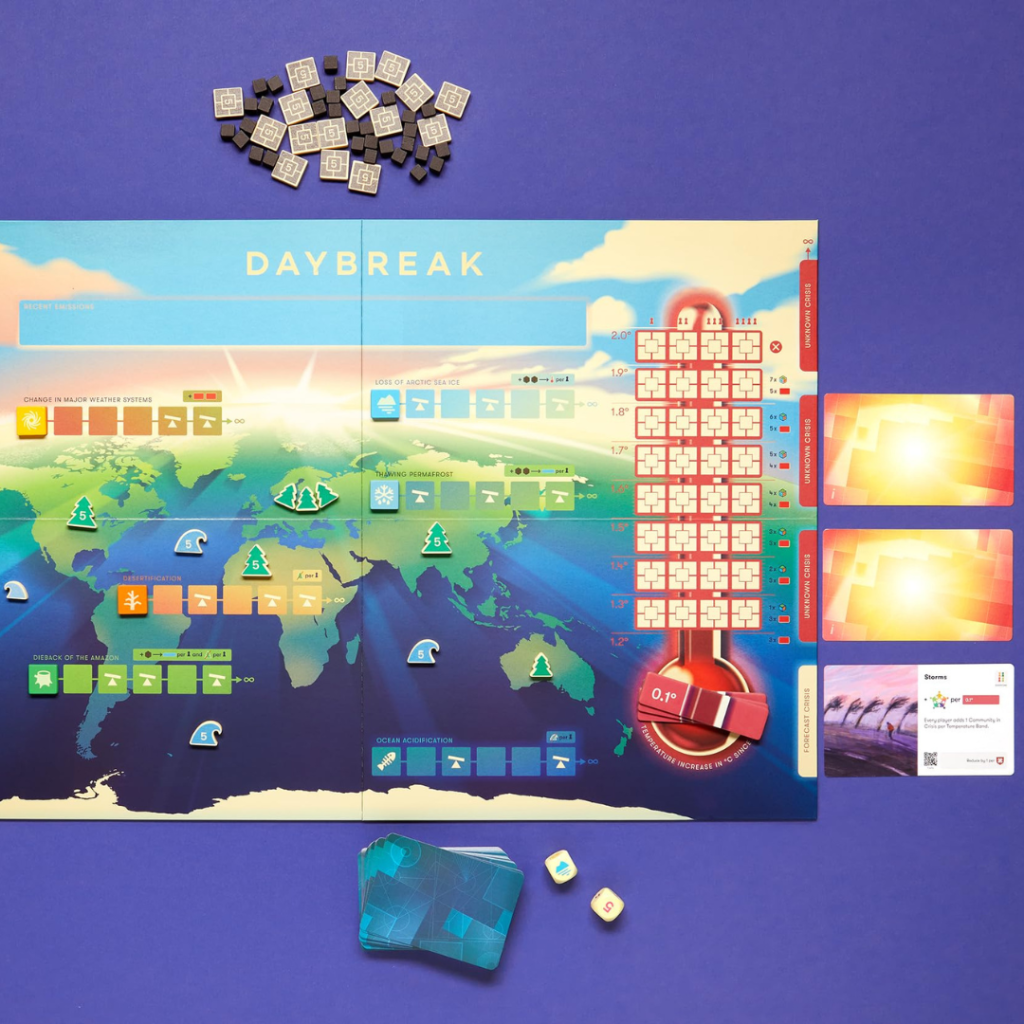
Next up is one of the most acclaimed climate board games out there and the winner of the Kennerspiel des Jahres 2024. Designed by Matt Leacock, who also created Pandemic, and Matteo Menapace, Daybreak is a cooperative board game with a genuinely hopeful vision of the near future, all about building resilient societies together. Each player represents a major world power and starts developing local and global projects, combining cards into some pretty satisfying synergies around things like clean energy, electrification and social resilience. The group wins by hitting net zero, but can just as easily lose if communities start collapsing under droughts, floods, heatwaves and other climate crises.
If you’ve ever played Pandemic, you’ll understand the feeling fairly quickly: everyone is technically on the same side, but there’s always too much going wrong at once and you need to figure out what each person should focus on. Some players love Daybreak’s optimistic framing because climate games can otherwise get pretty depressing, while others think it can feel a little too hopeful and say replayability wears thin after enough rounds. Either way, this is probably one of the easiest games on the list to recommend to someone who already likes modern board games and doesn’t mind spending an hour or two nerding out on climate policy.
- Best for: Strategy gamers, friend groups and people who enjoy games like Pandemic
- Players: 1–4
- Time: Around 60–90 minutes
- Price in India: We found it listed at around ₹6,500, although imported stock changes regularly
- Official website: https://www.daybreakgame.org/
- How to play: https://www.youtube.com/watch?v=ydEZNDAM4SY
- India listing: https://www.boardgamesindia.com/daybreak
Kyoto
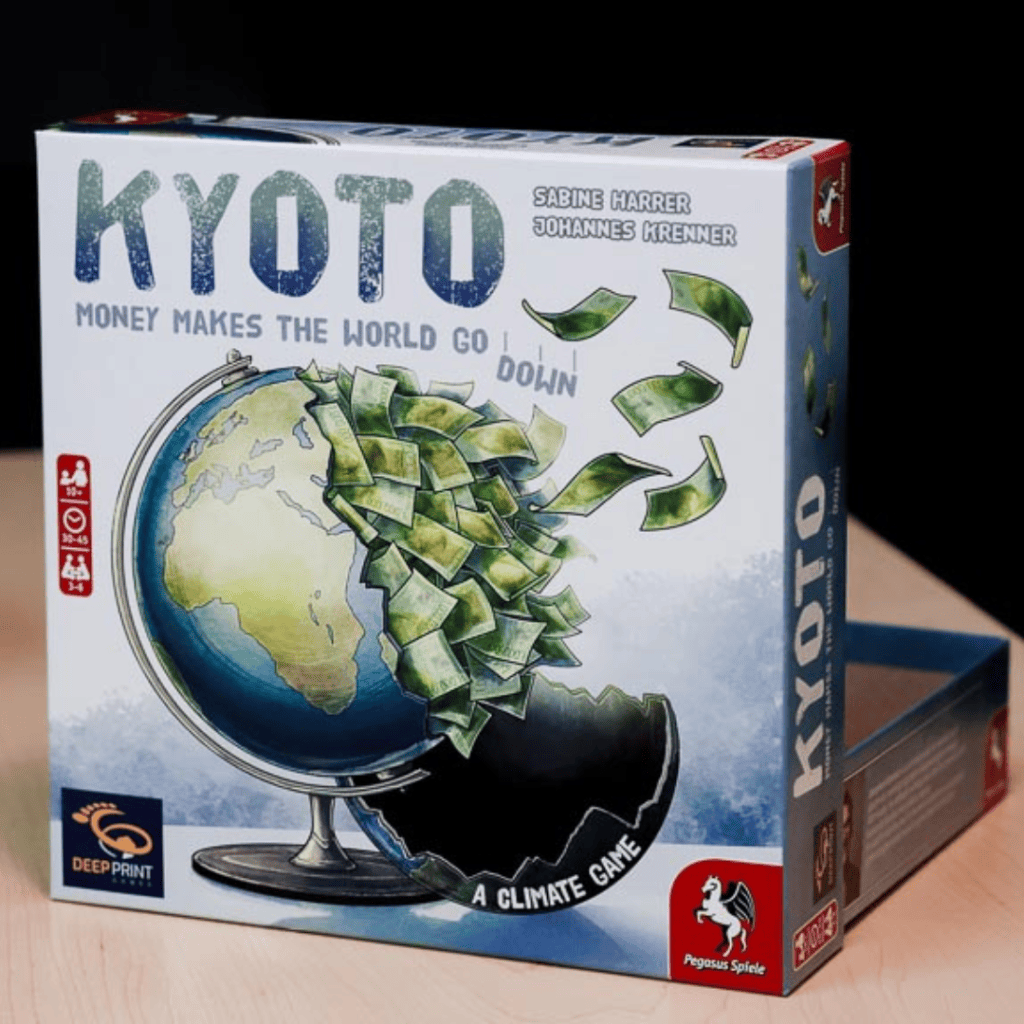
Picture this: you just wrapped a three-hour game of Monopoly and want something lighter to close out the night. Enter Kyoto, a climate policy game that can be done in roughly 30–45 minutes and is honestly the perfect filler if your friend group enjoys arguing. Where Daybreak leans hopeful and cooperative, Kyoto keeps things a little messier. Players become world leaders trying to collectively fund enough climate action to stop environmental collapse, except everyone has their own economic interests and secret agenda alongside those climate goals. So yes, you want to save the planet, but preferably while protecting your own country’s bag.
That’s really where the fun comes from, because suddenly you’re negotiating over who should pay, convincing someone else to make a sacrifice, threatening to walk away and generally behaving suspiciously like an actual climate summit. Whoever comes out financially strongest can win, assuming everyone hasn’t collectively tipped the planet over the edge first. It’s much lighter than something like CO₂: Second Chance and works well if you want a climate game you can bring to a normal hangout without asking everyone to study a rulebook beforehand. Only downside: the short playtime sometimes cuts the arguments off right when they’re getting good.
- Best for: Parties, friend groups and people who enjoy negotiation games
- Players: 3–6
- Time: Around 30–45 minutes
- Game information: https://boardgamegeek.com/boardgame/317643/kyoto
- How to play: https://www.youtube.com/watch?v=XNkg5a3mbcM
Evolution

Evolution: Climate is a refreshed version of the popular Evolution game, now with a climate twist. The core idea is still fairly simple: create species, feed them and evolve traits that give them a better chance of surviving than whatever your friends have created. Maybe you grow a long neck, develop defensive traits or become a carnivore and start eating everybody else. The Climate edition adds temperature changes and extreme conditions into that ecosystem, meaning you’re no longer adapting only to other species but also to a world that can suddenly become much hotter or colder.
If climate negotiations and energy policy aren’t really your thing but biodiversity is, this is probably the game on the list you’ll gravitate towards. It’s less about explicitly teaching you climate science and more about making you experience how changing environmental conditions alter an ecosystem. That said, some fans of the original feel the climate mechanics can feel a little bolted-on rather than completely changing the game, so if you already own Evolution this might not feel revolutionary. Still worth checking out for yourself, particularly if the biology and ecology side of climate change is what interests you.
- Best for: Nature lovers, biology nerds and competitive strategy players
- Players: 2–6
- Time: Around 60 minutes
- Game information: https://boardgamegeek.com/boardgame/182134/evolution-climate
- How to play: https://youtu.be/vVj-o7wUHfg?si=XOHLdHZir3yrq1TZ
CATAN: New Energies & CATAN: Oil Springs
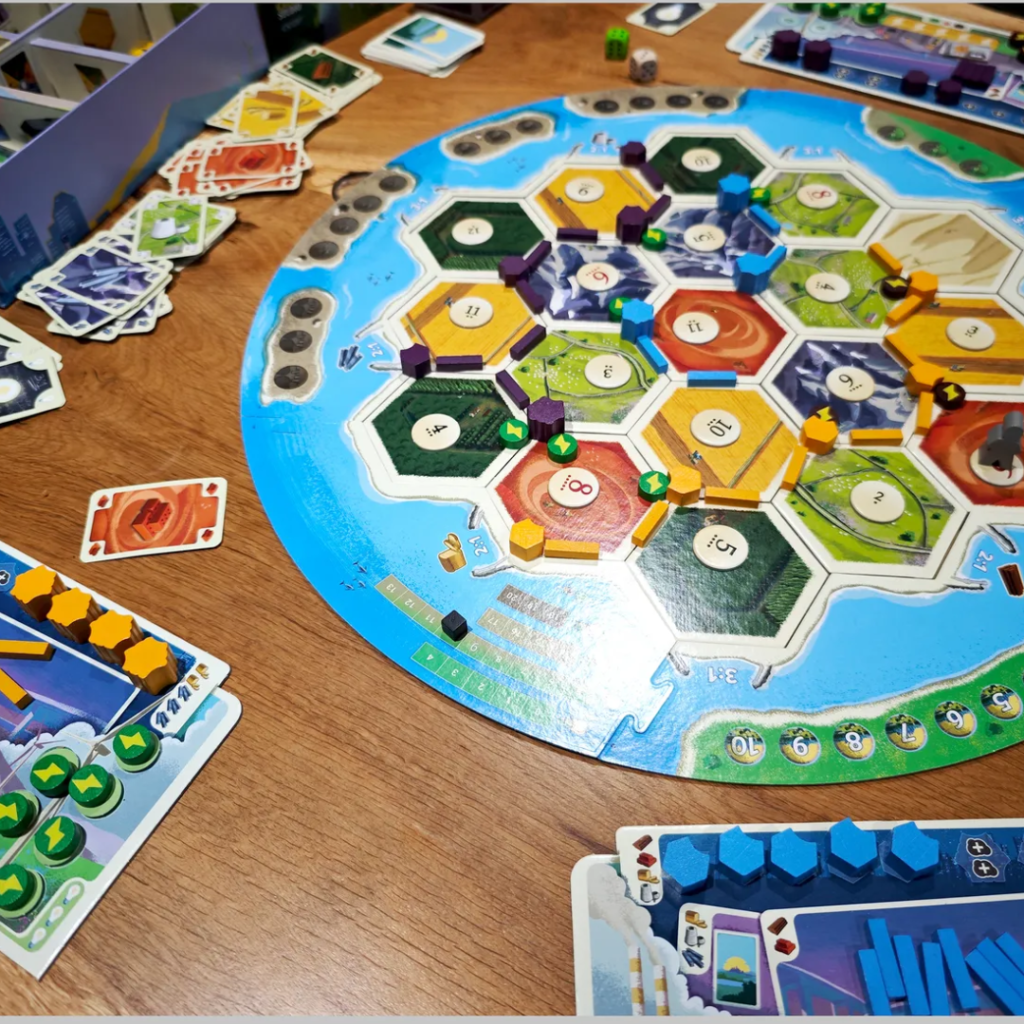
CATAN, formerly Settlers of Catan, is the classic strategy game about building settlements and trading resources: settlers on an island, negotiating deals, fighting over the best spots on the map and somehow ending up with seven sheep when all you need is one piece of brick. The climate versions take that familiar world and basically ask what happens once Catan industrialises.
In CATAN: New Energies, you begin with cheap fossil fuels that trigger pollution events and can mess with everyone’s resource production, while investing in renewable energy becomes more rewarding over time. The clever bit is that the greenest player doesn’t automatically win, which makes the trade-off considerably more interesting than simply telling everyone fossil fuels are bad.
CATAN: Oil Springs plays with a similar dilemma but is actually an expansion/scenario for the original CATAN rather than its own standalone game. Oil lets you develop quickly and gives players some very tempting advantages, but continued use increases the risk of disasters and coastal flooding that affect everyone. Basically, you know continuing to use oil is a bad idea, everyone around the table knows it’s a bad idea, but you also know that using just a little bit more could help you win. If you already like CATAN, both are absolutely worth exploring, although New Energies is probably the easier place to start because it’s a complete standalone game and is now also playable online through Board Game Arena.
- Best for: Existing CATAN fans and anyone interested in energy-transition trade-offs
- Players: New Energies is 3–4 players
- Time: New Energies takes around 90 minutes
- CATAN: New Energies: https://www.catan.com/new-energies
- CATAN: Oil Springs: https://www.catan.com/oil-springs
- Play New Energies online: https://boardgamearena.com/gamepanel?game=catannewenergies
Climania
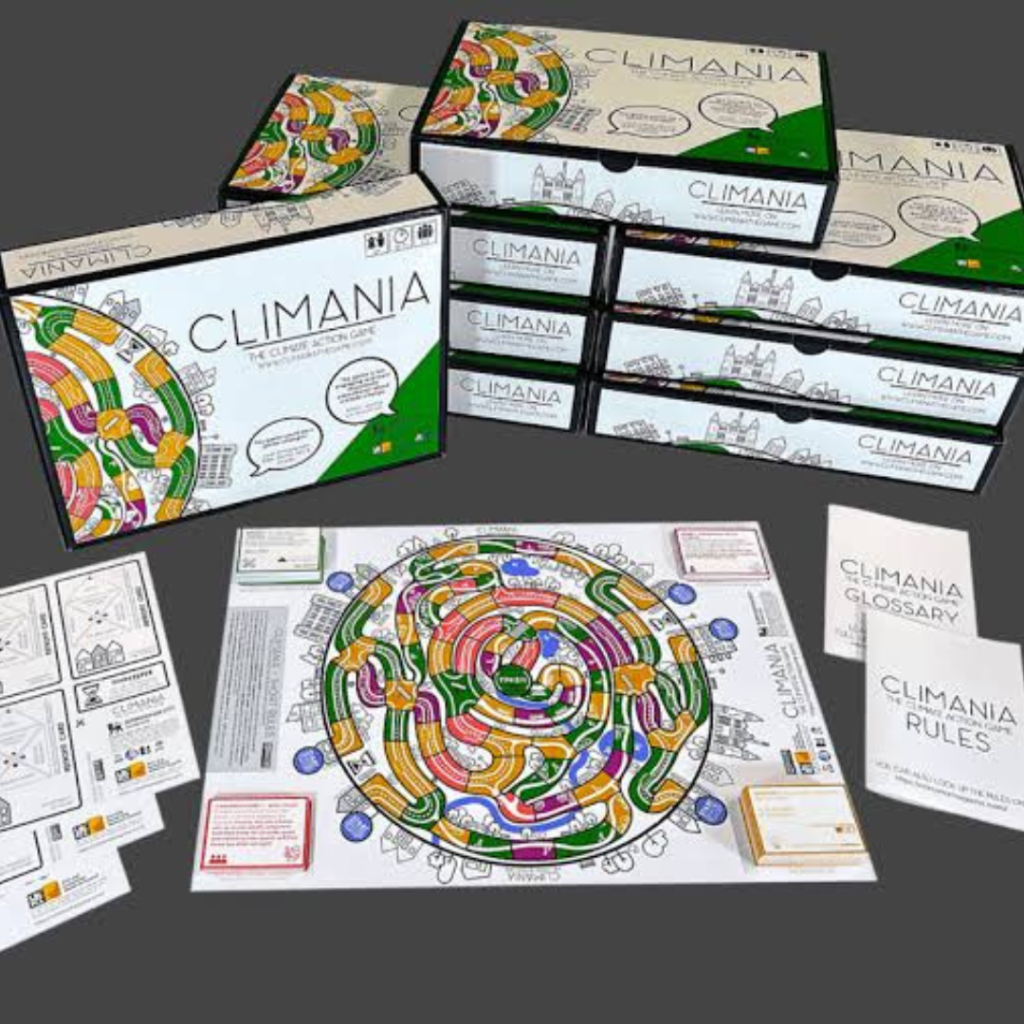
Something a little different: Climania was dreamed up with young people aged 14–18 as a way of making climate education around buildings and cities a little less PowerPoint-y. The objective is to upgrade buildings to become more climate-resilient and energy-efficient, and as players move around the board they answer questions around climate change, energy and urban planning to earn upgrades along the way. It’s not really trying to compete with Daybreak as something a group of board-game enthusiasts would spend Friday night playing, but that isn’t what it needs to do.
Where Climania becomes genuinely interesting is for teachers, youth groups and families looking for something they can simply download and use. The game is completely free to print and play, which immediately makes it one of the most accessible things on this list, and its focus on buildings gives younger players a much more tangible entry point into climate action than starting with carbon markets or international negotiations. It’s a fantastic introduction to sustainability and built environments and, honestly, it’s hard to argue with the price.
- Best for: Schools, teachers, youth groups and families
- Price: Completely free to print and play
- Website and downloads: https://climaniathegame.com/
Climate Action Game

Switching things up from card and board games, World Climate and Climate Action Simulation, both created by Climate Interactive, are full-on roleplay simulations. World Climate basically puts you inside a fictional UN climate summit: one group might represent India, another China, another the United States or the EU, and everyone has to negotiate emissions commitments before those promises are entered into the C-ROADS climate simulator to see where global temperatures actually end up. You can spend ages congratulating yourselves on reaching an agreement only for the simulator to casually inform you that you’ve created a 2.8°C world, at which point everyone goes back into negotiations.
Climate Action works on a similar principle but moves away from countries and instead gives people stakeholder roles across government, business, conventional energy, clean technology, agriculture, civil society and climate justice. The group proposes different solutions and uses the En-ROADS simulator to immediately see what happens if you dramatically expand solar, price carbon, improve energy efficiency or rely mostly on tree planting. These aren’t traditional “games” in the sit-around-the-table sense, but they’re widely used with students, professionals and policymakers because you’re effectively getting to play with the same kinds of trade-offs people make in the real climate transition.
- Best for: Universities, schools, workplaces, conferences and policy nerds
- Players: World Climate works particularly well with around 8–50 people but can scale much larger
- Time: Usually around 1–3 hours depending on the format
- World Climate: https://www.climateinteractive.org/world-climate-simulation/
- World Climate resources: https://www.climateinteractive.org/programs/world-climate/facilitator-resources/
- Climate Action Simulation: https://www.climateinteractive.org/climate-action-simulation/
CO2: Second Chance
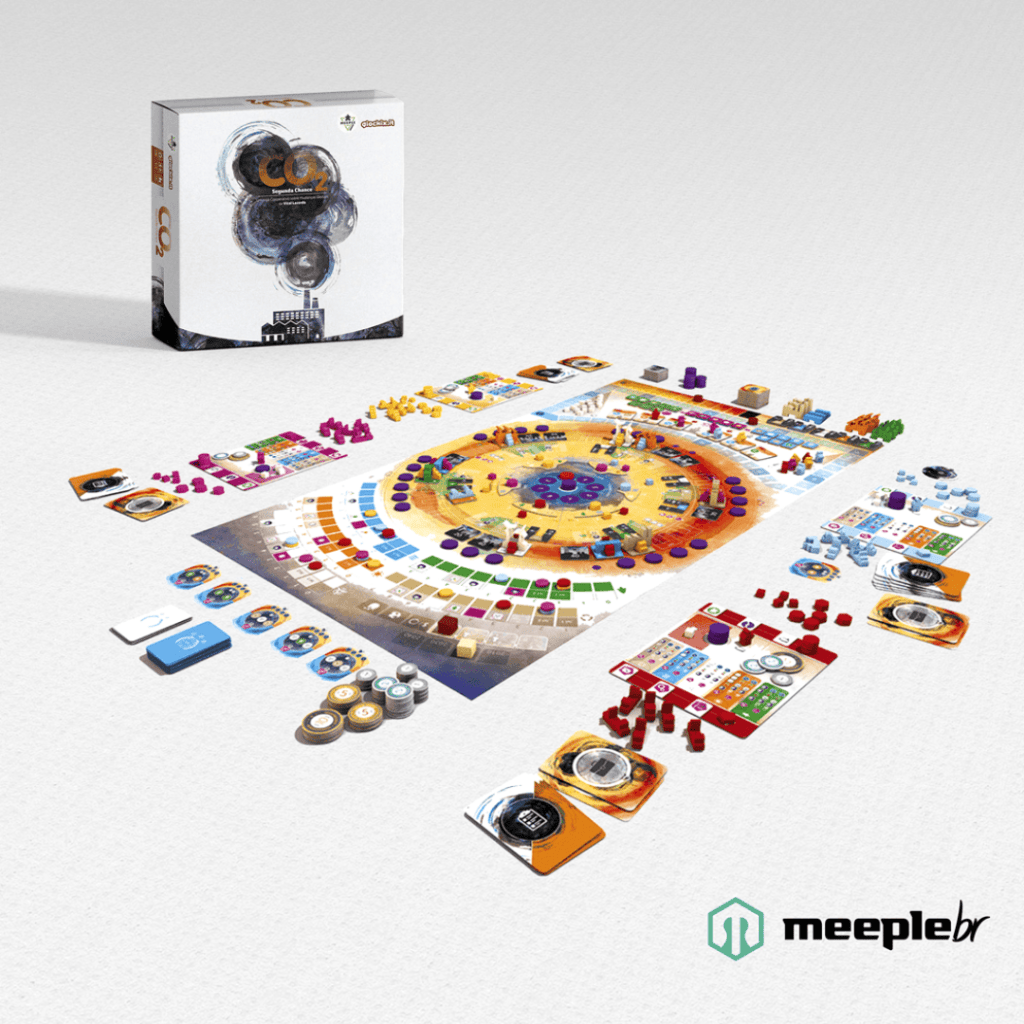
A favourite among people interested in energy, circular economics or ESG, CO₂: Second Chance casts players as CEOs of energy companies responding to government calls for greener power projects. You research technologies, develop renewable energy infrastructure and try to stop atmospheric CO₂ from crossing a critical threshold, which sounds cooperative enough until you realise that you are still running competing companies and would quite like to come out on top yourself.
That dual structure is what makes this one stand out: everyone has to collaborate enough to make sure the planet survives while still trying to play the strongest individual game, so it ends up reflecting some of the weird incentives of the real transition surprisingly well. Fair warning though, this is probably the nerdiest game on the list and BoardGameGeek rates its complexity at more than 4 out of 5, so I would absolutely not introduce someone to board games with this. If your friends hear “two-hour economic strategy game about clean energy companies” and become more excited rather than less, however, congratulations, you’ve found your audience.
- Best for: Experienced strategy gamers, energy nerds and ESG people
- Players: 1–4
- Time: Around 60–120 minutes
- Price in India: We found it listed at around ₹7,499
- India listing: https://boardway.in/products/co-second-chance
- Game information: https://boardgamegeek.com/boardgame/214887/co2-second-chance
- How to play: https://www.youtube.com/watch?v=xLmbKCUSWEs
A special note: we’re ending this list with two games designed right here in India, and we couldn’t be more excited about them.
Climatch

Climatch is a card game designed by Aayaan Singh Jamwal and is probably one of the easiest games on this list to explain to someone: it’s a fast-paced matching game where players race to find the single common symbol between any two cards. If you’ve played something like Dobble, you’ll understand the idea almost immediately, except here the imagery comes from the world of climate change and sustainability, so people start recognising climate-related symbols and ideas while they’re playing rather than sitting through an explanation beforehand.
The game is recommended for ages 12+, although a reviewer mentioned playing it with her seven-year-old and him still enjoying it, even beginning to recognise certain symbols. That probably tells you who Climatch works best for: families, younger players and groups where you want climate education somewhere in the background without making the entire activity feel educational. If Climate Fresk is something you organise an afternoon around, Climatch is something you can actually throw into a bag and bring out whenever.
- Best for: Families, younger players and quick casual game sessions
- Explore Climatch: https://www.instagram.com/climatch_game/
- More from Aayaan / ordering information: https://linktr.ee/aayaansingh
Bird in the City
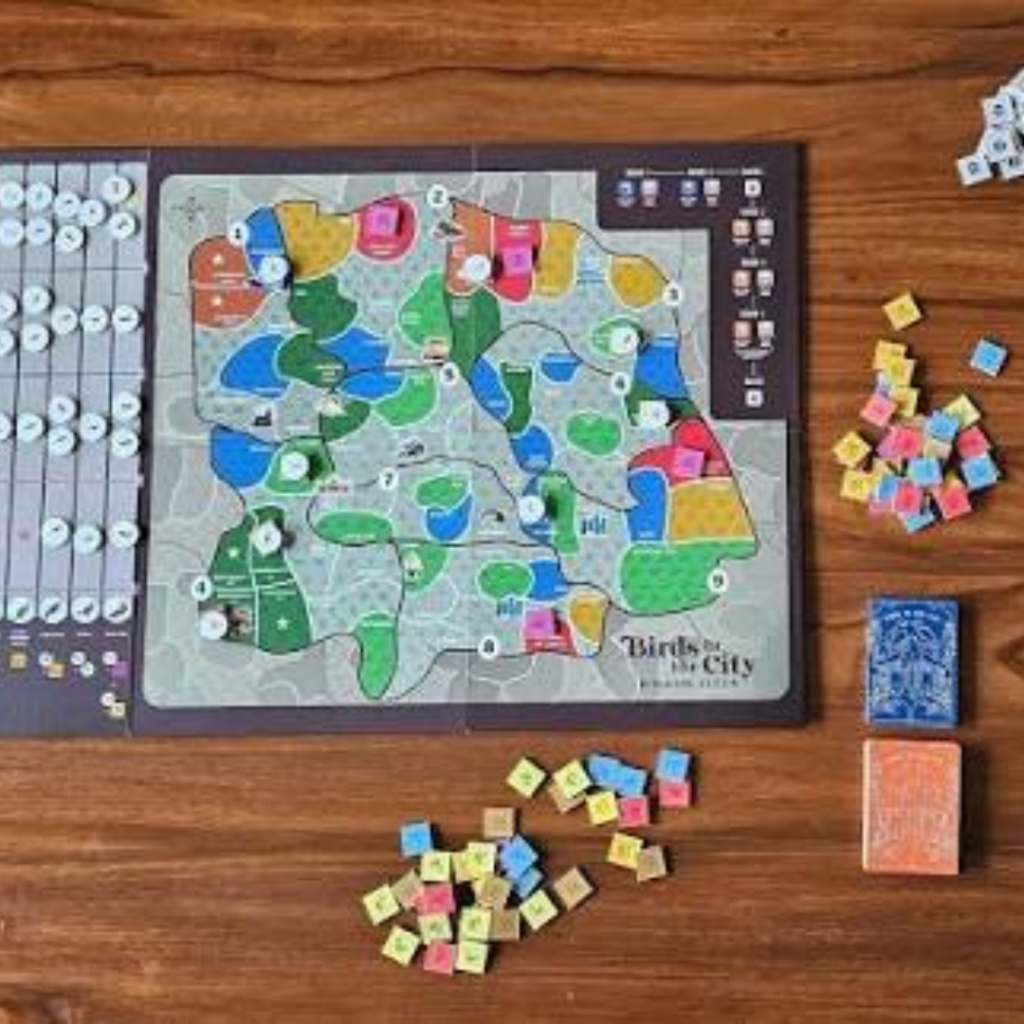
Finally, a game made specifically around Bengaluru. Birds in the City, designed by Play in Nature, explores something that becomes very obvious once you start paying attention in almost any Indian city: we keep building roads, housing and infrastructure, while birds and other wildlife somehow have to figure out how to live around all of it. The game turns that relationship between urbanisation and biodiversity into a cooperative board game where players work together to bring as many bird species as possible back into the city. Good and bad events unfold as the game progresses, and players draw action cards to try to improve the city’s habitats and turn things around for its wildlife.
I really like that this one doesn’t ask you to think about some abstract forest on the other side of the planet, because the whole point is the biodiversity of an Indian city you can actually walk through. It gives you a way into questions around disappearing green spaces, urban development and the ecosystems sitting right alongside us, and because everyone is playing together rather than competing it works well with families and younger groups too. If you’re somebody who already notices birds on your balcony or gets annoyed every time another patch of green disappears under construction, this is probably the one you’re going to connect with most.
- Best for: Families, biodiversity lovers, birders and people interested in Indian cities
- Play in Nature: https://www.playinnature.in/
- Birds in the City resources: https://www.playinnature.in/game
Which one should you actually play?
If you want to properly understand climate change, start with Climate Fresk. If you already love modern board games, Daybreak is probably the easiest recommendation on this list, while Kyoto works if the fun for you is mostly in arguing with your friends. CATAN fans should absolutely look at New Energies, biodiversity people will probably enjoy Evolution: Climate or Birds in the City, and if you’re a teacher looking for something with basically zero budget, Climania is an easy one to try.
For bigger groups, World Climate and Climate Action Simulation are in a different league because you’re not just talking about climate negotiations or solutions, you’re actually getting everyone to play them out. CO₂: Second Chance is for the people who see the words “complex economic strategy” and get excited, while Climatch makes much more sense if you want something quick, accessible and designed right here in India.
Which of these games are you most excited to try? If you want to play rather than just read about them, Climate Undone runs interactive climate workshops across India including Climate Fresk, Biodiversity Collage, Energy Collage, Planetary Boundaries Fresco and Climate Action Simulation: https://climateundone.org/our-workshops/. And if you know an Indian climate game we’ve missed, send it our way because we’d love to keep adding to this list.
